

Welcome to this week’s Beyond Line of Sight!
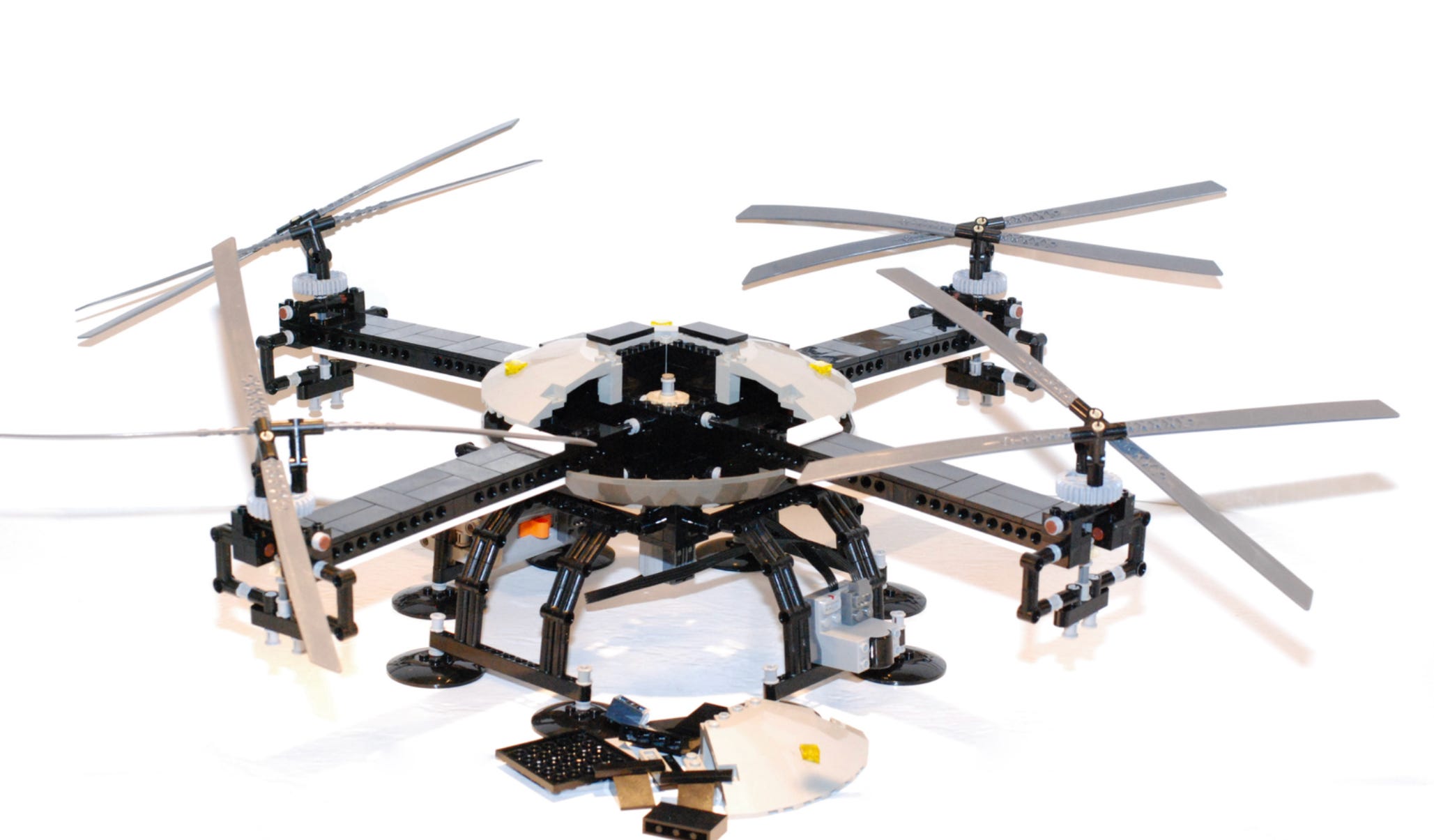
Drones are quickly becoming a commodity. Winning in commoditised markets is difficult as products converge into a few well-defined categories. Yet, there are some companies who win in these markets. Nintendo was one that we have covered previously, here:

Today, let’s focus on Lego’s success in the very commoditised industry of toys, and what the drone industry can learn from Lego’s success.
First, some background.
Founded in the 1932, Lego never posted a loss until 1998. By 2003, it was $800 million in debt. Lego tried everything from jewellery and clothes to theme parks and even a video-game studio. None of it stuck – only licensed tie-in sets (Star Wars, Harry Potter) sold well, and even those only around movie releases.
By 2009, Lego was profitable again. In 2024, Lego posted record revenues and operating profit. Here are three lessons from Lego’s success that can be applied to the drone sector.
Double down on your core
Lego learned that the brick was the star product even though it felt like a commodity. It is what the customers expect from Lego. Instead of ditching it in the name of ‘innovation’, Lego double downed. Lego built new worlds around it through stories, games, and movies.
Avoid ‘shiny object syndrome’
Lego’s near-collapse was worsened by chasing shiny objects — fashion, parks, and whatnot. Lego only went after a few trends (like the Lego movies) and focused on making these work.
Build an ecosystem, not just hardware
Some of the most successful businesses build ecosystems. Lego’s Bionicle line, launched in 2001 — soon after Lego’s financial troubles. Bionicles wasn’t just another toy line. It came with deep lore, comic books, movies, even an online game. Bionicles were selling like hotcakes. In just 2 years, Bionicles was 25% of Lego’s revenue.
Lego also launched ‘Lego Ideas’ platform where over 2.8 million customers contributed and debated over 135,000 ideas. By doing this, Lego created a self-sustaining ecosystem where customers wanted to contribute, innovate, and advocate.
The takeaway:
Even for commoditised products, doubling down on the core and what customers expect from the brand, not chasing hot trends, and building a self-reinforcing ecosystem will help companies win in the fast-commoditising drone industry.
The Headlines
Defence and Security
Ukrainian President Volodymyr Zelenskyy warned that Chinese citizens may be helping Russia build drones, risking technology theft and global drone industry disruptions.
The UK and New Zealand have signed a $39.9 million deal to supply advanced drones to Ukraine, boosting its defense and creating new jobs in the drone sector.
British troops successfully tested a new radio-frequency weapon in West Wales, disabling over 100 drones at low cost.
ELT Group unveiled KARMA, an AI-powered, mobile counter-drone system that silently detects and neutralises threats without radar, offering flexible protection for military and critical infrastructure.
Partnerships
Sentrycs and Xtend have joined forces to combine drone interception and AI-driven autonomy, aiming to better detect and neutralise rogue drones for military and special ops teams.
Avtrain and ANRA Technologies partner to launch SORA-Mate in May 2025, an automated tool designed to simplify risk assessments and speed up regulatory approvals for UK drone operators.
Korean Air and Doosan Enerbility have partnered to develop advanced aircraft engines and hydrogen-powered drones, strengthening South Korea’s push into aerospace innovation and green technology.
Money Matters
Contracts
Modini Limited: £4.5 million contract from UK MOD to deliver One Way Effector (OWE) precision strike drones.
Near Earth Autonomy: won a $790,000 contract to provide its Firefly Miniaturized Autonomy System for the U.S. Marine Corps' TRUAS program.
AeroVironment: secured a $46.6 million contract with the Italian MOD to supply JUMP 20 VTOL drones.
Investment and M&A
Certo Aerospace raised over £3 million to accelerate UK flight trials of its CAPSTONE uncrewed helicopter.
ABOUT THE AUTHOR
This newsletter is authored by Adit Shah, a UK-based business and strategy consultant specialising in aerospace, defense, and space sectors. For contact, please get in touch via LinkedIn.