

Welcome to this new format of the newsletter!
Lots has happened in the aerospace, defence, and space sectors in July. Lets focus on these three:
BAE half-year results
European CCAs (or the lack thereof)
Small European Launchers
BAE Systems’ Half-Year Results
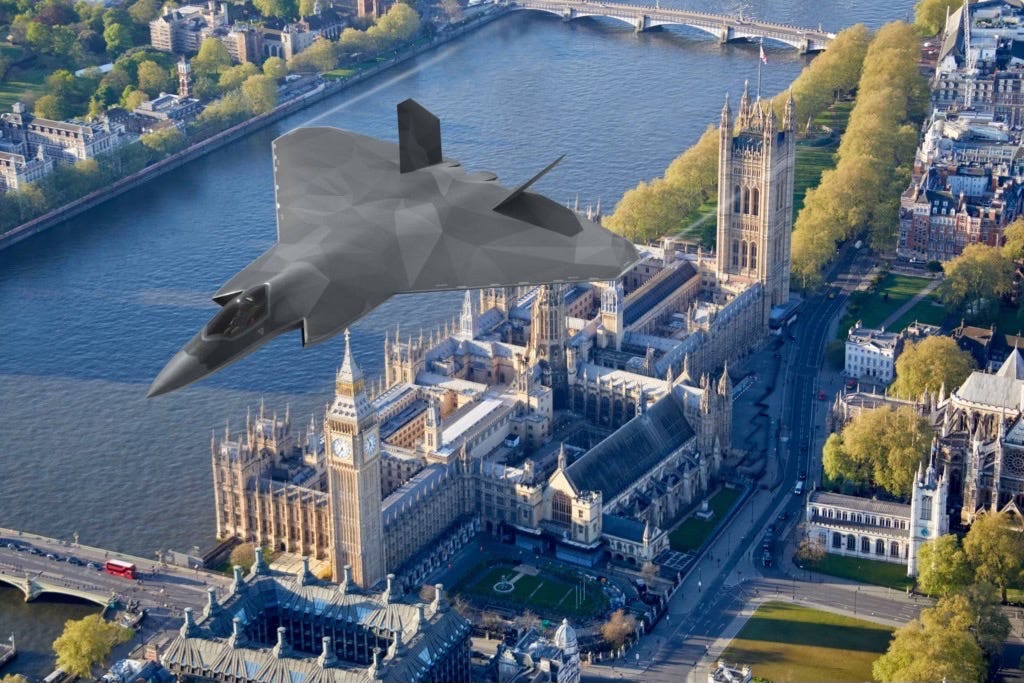
Ignoring this badly photoshopped image of the GCAP 6th Gen Fighter Jet over Houses of Parliament, BAE Systems had a decent month — Türkiye and UK announced MOU to purchase 40 Typhoon jets, successfully completed a trial launching precision munitions from its Malloy T-150 UAS, and announced strong half-year results.
BAE Systems’ results boast big numbers — a 9% organic growth in sales, £75.4bn order backlog, and £180bn in pipeline (forecast) with a timeframe of 2035+.
Take forecasts like the 10+ year pipeline of £180bn with a handful of low-sodium salt, because the underlying assumptions aren’t visible. 10-years isn’t a long time in aerospace and defence, but for the thousands of SMEs and large suppliers that BAE Systems buys from in the UK and abroad, that number doesn’t mean much.
Instead, if you are part of the BAE Systems supply chain, align with the underlying trends that are visible — defence spending rising globally, militaries focusing on developing and procuring autonomous systems, AI, and cyber/EW.
Even though Typhoon production is almost grinding to a halt, Typhoon related developments, upgrades, and MRO related activities will likely grow to keep those aircraft flying. As an example, BAE Systems partnered with Avioniq to bring AI-driven live threat mapping to Typhoon.
European CCAs (or the lack thereof)
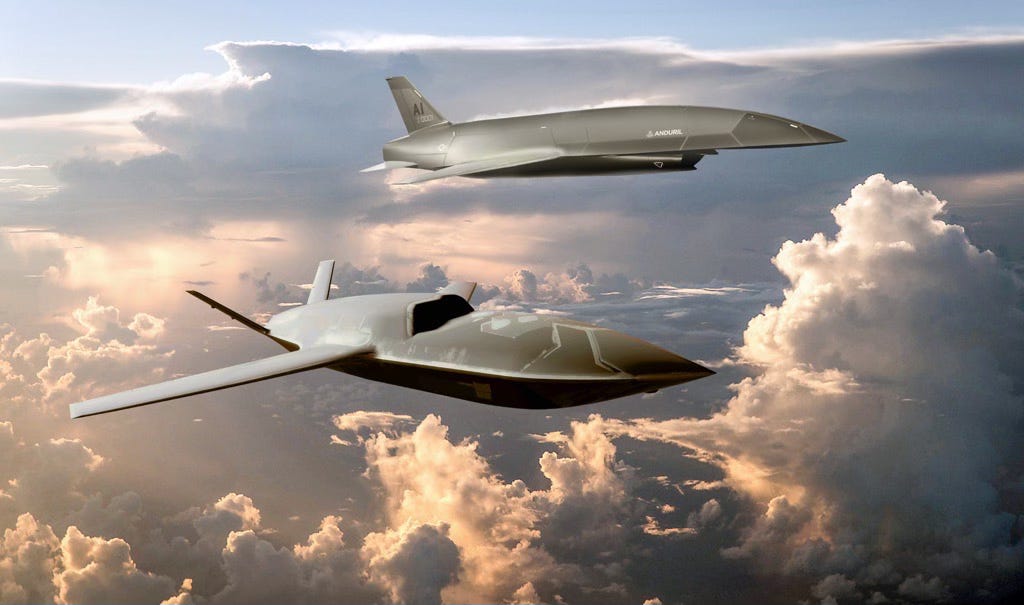
Small quadrotor drones and fixed-wing eVTOLs are quickly commoditising. CCAs are the “next big thing”. They are an integral part of the ‘system of systems’ philosophy that is starting to become the new norm for warfighters.
The US, with the YFQ-42A (General Atomics) and the YFQ-44A (Anduril) already in ground testing with maiden flights later this year and be operational by 2030.
Europe and UK don’t have many indigenous options. An updated Dassault nEUROn (first flew in 2012) was showcased at the Paris Air Show earlier this year, with a planned EIS in 2033 — a few years later than the US CCA platforms. BAE Systems unveiled two concepts in 2022. Nothing has been heard since.
Europe will be considering the US platforms. Partnerships have formed — Anduril x Rheinmetall offer Fury, Airbus D&S x Kratos offer Valkyrie, and Boeing looking for a European partner for Ghostbat. Italy is also considering the Turkish Kızılelma.
In the UK, the MOD has already introduced Tekever’s AR3 as Stormshroud Mk1 in operations as collaborative platforms to support F-35B Lightning and Typhoon, and have just launched tranche two of their ‘loyal wingman’ programme.
The point is — Europe is behind in developing CCAs, and the void will likely be filled by non-Europeans players through partnerships.
Small European Launchers
In early July, ESA selected 5 companies for its ’s European Launcher Challenge (ELC). ELC’s aim is to provide launch services to ESA between 2026 and 2030 and demonstrate upgraded launch capabilities. Each company will get up to €168mn.
The 5 companies selected are Isar Aerospace, MaiaSpace, Rocket Factory Augsburg, PLD Space, and Orbex.
ESA is trying to go with the funding model that has worked well for the US, and that’s great. European sovereign launch capability is essential. The challenge is, the funding still has to be approved by the member states of these companies’ location.
Additionally, developing launchers is expensive — to date, only 1 of 5 of these companies (Isar Aerospace) has raised more than €500mn. By comparison, Firefly Aerospace has raised $589mn.
That’s not to say funding is everything — Rocket Lab had only raised somewhere around $148mn to get to first flight.
Overall, relying on ESA and European customers as the main market is not a sustainable business model for European launch providers. Globally, the launch market is very competitive, and increasingly becoming more cost-competitive as launch becomes a ‘commodity’.
Initiatives like ESA’s ELC are great, but they are a few years too late.
What’s more:
New U.S.–EU trade agreement shields aircraft, engines and aerospace parts from newly imposed 15% tariffs on most EU goods, preserving a zero‑tariff regime essential to the aerospace supply chain.
Secretary of Defense Pete Hegseth's "Unleashing U.S. Military Drone Dominance" directive aims to rapidly expand the Pentagon's drone arsenal through procurement overhauls, increased domestic production, and widespread integration into military training, with specific deadlines to achieve drone superiority by 2027.
China's AutoFlight CarryAll became the first two‑tonne eVTOL aircraft in the world to receive full airworthiness certification.
Joby Aviation is quietly testing a hydrogen‑powered autonomous UAV called the JAI 30, which flew for over nine hours during a test at Pendleton UAS Range — without public disclosure by Joby.
Regent launched a new military-focused division to build hybrid ground‑effect seaglider vehicles for the U.S. Marines, while China revealed photos of its own large four‑jet “Bohai Sea Monster” ekranoplan.
India’s probe into the June 12 Air India crash found both engine fuel switches were moved to “CUTOFF” after takeoff, causing engine failure, with no fault yet confirmed.
SES exceeded Q2 forecasts thanks to rising European defense spending, strong government deals including a €690M contract, and momentum from its Intelsat acquisition.
Australia’s first domestically built orbital rocket, the Eris by Gilmour Space Technologies, crashed just 14 seconds later in a planned data‑gathering test that left engines, systems, and launch infrastructure intact.
Gen. Michael Guetlein, newly confirmed to lead the Pentagon’s Golden Dome initiative, has been ordered to deliver a full architecture and implementation blueprint within 60 days, with the goal of a U.S. homeland missile defence system operational in about three years.
ABOUT THE AUTHOR
Adit is the founder of Elantar, a UK-based boutique strategy consulting firm specialising in helping companies grow faster in aerospace, defence, and space sectors. For contact, get in touch via LinkedIn.