

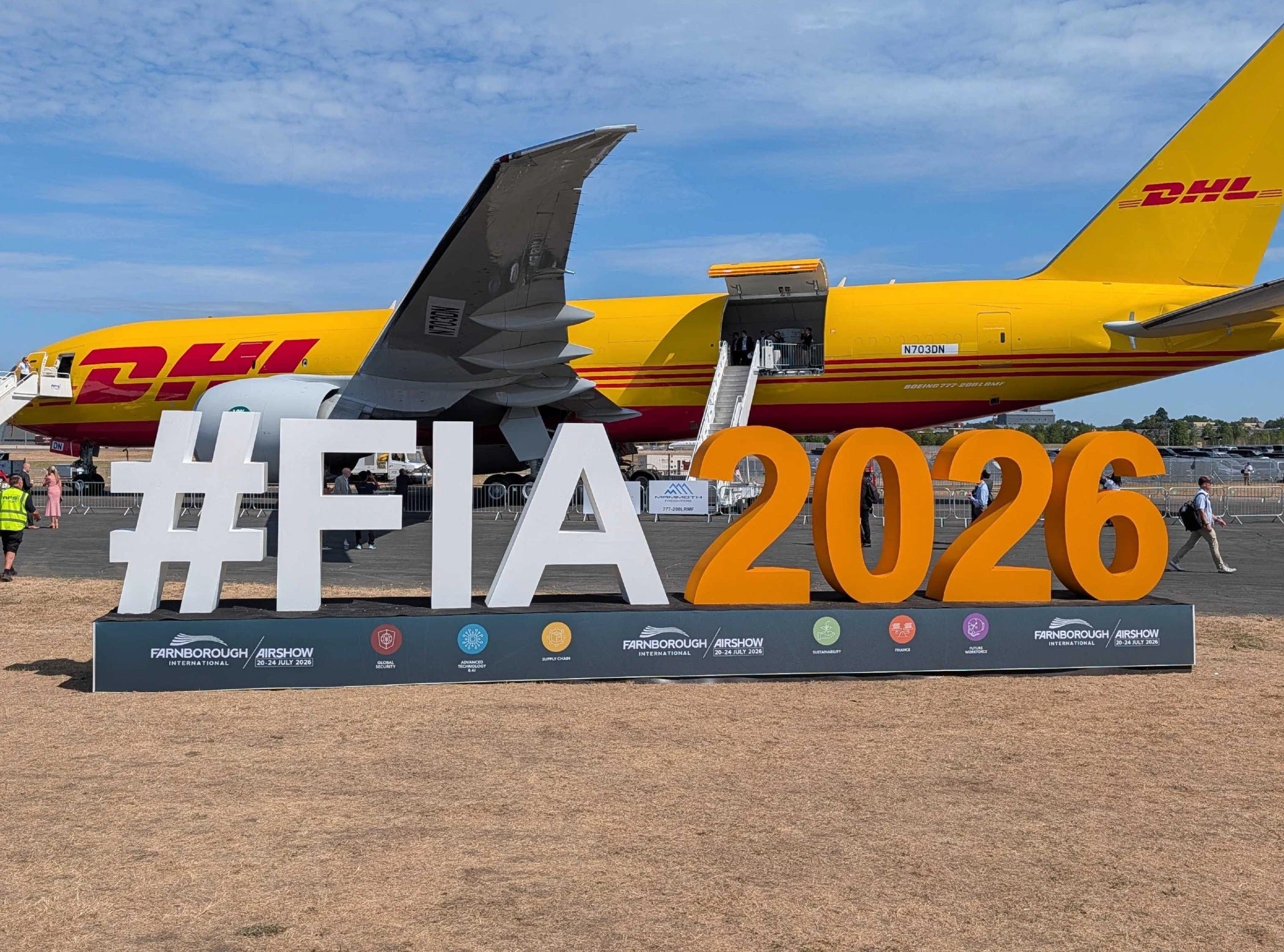
Farnborough Airshow 2026 was busier and more global than the last one. The numbers prove it: 141k visitors (vs 100k in 2024) from 136 countries (vs. 114 countries in 2024) and almost an hour long queue each day to leave the car park.
More importantly, it felt more “mature” than in 2024. Maturity in emerging technologies - AI, autonomous systems, eVTOLs - but also in the way companies have been thinking about risk and resilience in the increasingly unstable geopolitical world. Supply chain pressures still exist, though they seem to have eased.
A lot of demand that had been forecasted before is starting to materialise. Farnborough Airshow is usually headlined by Boeing vs Airbus order numbers, contracts, and big announcements - I’m not going to focus on those here. This isn’t about the news from the show, it’s about the underlying patterns and what founders and executives should take from it.
Different themes, one common thread
UAS and autonomy were dominant, with most of the focus on defence and dual-use. Traditional primes and OEMs to Neo-primes and startups, all showcasing UAS from small FPV drones to large CCAs. BAE Systems unveiled its own CCA, the Brontanax.
Small, low-cost missile systems are another hardware trend showing up more often at airshows, frequently pitched for use against drones. Players like Destinus are increasingly focusing on rapid production and scalability of missile systems and are finding immense success through partnerships - for example with Rheinmetall and Thales - and with a huge financial war chest of €400M with another €200M being raised.
The emerging air taxi and eVTOL companies, usually focusing on civil and commercial markets, are pouring more money and resources into defence. Archer partnered with Anduril to unveil the Thunder autonomous attack aircraft at the show, and the UK military expressing interest for Vertical Aerospace’s Valo aircraft are two examples. Defence lets them use existing demand while sidestepping the certification hurdles that have slowed civil commercialisation. These companies have also been increasingly looking at hybrid propulsion, given the energy density limitations of batteries combined with the complexity of distributed electric propulsion.
Space has also grown and matured since the last show. It’s becoming the invisible infrastructure upon which the UAS and autonomy sit on.
No trend today is complete without AI. It has already been deployed on the frontlines and is increasingly being used in military decision making, though deployment to the factories hasn’t caught up yet. Early adopters are making progress towards scaled deployment in factories, and though there is much more to be done to make AI the norm in ADS factories, every signal points this way.
The ADS tiered supply chain has grown too, with new and established suppliers specialising in everything from propulsion and flight control systems to parts and materials. The DIP, defence procurement demand, and commercial aircraft build-rate ramp-ups are all driving that.
What remains to be seen is who can scale fast enough to meet demand. Throughout what was showcased and talked about at the show, the one common thread across these is industrialisation.
I wrote in January that 2026 wasn’t a demand problem. The week at Farnborough proved that still holds. 2026 is an industrialisation problem.

For founders and executives, the question worth asking is not "is there demand" - clearly, there is. It’s "how fast can you rise to meet it". A prime doubles their order. The MoD wants fifty units instead of five. What happens to lead times. Whether the workforce, processes, and test capacity scale with the contract or against it.
That gap is where the winners over the next few years get decided, not in whose technology is the coolest or sexiest.
Demand isn’t the constraint anymore. Production is.